

What does it cost to sell a house in Australia?
| Cost | Typical range (2026) | Can you avoid it? |
|---|---|---|
| Agent commission | 1.6% to 3.5% of the sale price ($14,400 to $31,500 on $900k) | Yes, if you sell privately |
| Marketing / vendor-paid advertising | $2,000 to $10,000+ | Yes, or replace it with a flat listing fee |
| Conveyancing or legal fees | $700 to $2,500 professional fees | No |
| Disbursements and searches | $300 to $800 | No |
| ATO clearance certificate | Free | No, every seller needs one |
| Mortgage discharge fee | $150 to $400 | Only if you own outright |
| Discharge and title registration | Around $130 to $250 | Only if you own outright |
| Council and water adjustments | A few hundred, sometimes more | No |
| Compliance certificates (pool, smoke alarms) | $0 to around $500 | Depends on your property and state |
| Presentation (clean, repairs, styling, photos) | $0 to $10,000+ | Yes, it’s all optional |
| Moving costs | $500 to $5,000 | No, practically speaking |
| Stamp duty | $0 | Your buyer pays this, not you |
| Capital gains tax | $0 on your main residence | Applies to investment and second properties, not most family homes |
Agent commission is the big one
This is the first fork in the road, and it’s the one that decides most of your final bill. You’ve got two ways to sell: pay a traditional agent a percentage commission, or pay an online agent a flat fee of around a thousand dollars and handle the sale yourself. Nearly everything else on this page costs about the same whichever way you go. It’s the one line where tens of thousands of dollars sit, so get this number straight first.
Commission is charged as a percentage of the sale price and it’s negotiable, though agents don’t always volunteer that. Rates run from about 1.6% in competitive metro pockets to 3.5% in regional areas where there’s less competition for your listing, and they vary meaningfully by state. Our state-by-state breakdown of agent commission rates has the current numbers.
On a $900,000 sale:
- 2% is $18,000
- 2.5% is $22,500
- 3% is $27,000
Commission doesn’t scale with the work. Selling a $1.2 million house isn’t twice the effort of selling a $600,000 one, but the commission is twice the size. That’s the whole reason the flat-fee model exists.
Watch for tiered or “incentive” structures too, where the agent takes a low rate up to a target price and a much higher rate on anything above it. They’re pitched as motivation. Run the maths on where your house realistically lands before you agree to one, because the effective rate can end up well above a flat percentage.
See your own number
Put your sale price in and compare a typical commission with a flat listing fee. The difference is usually five figures.




Then there’s the marketing bill
Agents call it VPA, or vendor-paid advertising. It covers the portal listings, photography, floor plans, signboard, brochures and whatever else goes into the campaign, and it typically runs $2,000 to $10,000, with Melbourne and Sydney campaigns sitting at the top of that range.
And you pay it whether or not your house sells.
That’s the part that stings. Commission is contingent: no sale, no commission. VPA usually isn’t. If your campaign runs its four weeks and doesn’t produce a buyer, the invoice still lands, and you either relist and pay again or wear it.
Some agencies bundle marketing into the commission, some offer pay-on-settlement terms, and some quote a low commission specifically because the marketing package is where they’ve made their margin. Ask for the VPA number in writing, itemised, before you sign anything. If an agent is vague about it, that’s information.
For comparison, PropertyNow lists your property on the major portals for one flat fee, with licensed agent support seven days a week. The current figure is on our pricing page, and it’s the fee, not a deposit against a bigger one.
List privately and this whole bill largely disappears. There’s no four-week paid campaign to fund, so you can skip most of it or cut it right down. We’d still plan for two things, though: professional photography, because it’s the first thing every buyer sees, and a signboard out front, because your own street is one of the best advertising spots you’ve got. Together that’s usually a few hundred dollars rather than several thousand.
One more option if the timing’s tight. Buy-now-pay-later services built for property, like Zip Pay and Property.Credit, can spread the cost of your listing fee and any campaign extras, with the balance settled from your sale proceeds. Deferring a cost is never completely free, so use it for money you were going to spend anyway, and approval, terms and conditions apply. But it can take the upfront pressure off the parts of a campaign that genuinely earn their keep.

The costs that come with every sale
Conveyancing. You need a conveyancer or a solicitor. There’s no way around this one, and no reason to want to avoid it, because they’re handling the contract, the searches, the title transfer and the money. Budget $700 to $2,500 in professional fees plus roughly $300 to $800 in disbursements (the searches and certificates they order on your behalf), so around $1,000 to $3,300 all in. In Queensland and the ACT the work must be done by a solicitor rather than a licensed conveyancer, and in WA they’re called settlement agents. Some firms advertise a tempting headline fee that conveniently leaves out the disbursements, so ask for the all-in figure. We’ve written more on what a conveyancer actually does for a private seller.
Your mortgage. If there’s a loan on the property, your lender charges a discharge fee to close it and release its security over the title. Most sit between $150 and $400, and some lenders don’t charge one at all, so it’s worth a five-minute phone call. Your state’s land titles office then charges around $130 to $250 to register the discharge, and these go up most years on 1 July. And if you’re on a fixed rate and breaking the term early, ask your lender for a break cost figure in writing before you list. Break costs are calculated on the gap between your rate and current market rates, and on a large loan they can run into thousands.
Settlement adjustments. At settlement, your conveyancer squares up the bills you’ve already paid or still owe. If you’ve paid council rates through to the end of the quarter and settlement lands halfway through, the buyer reimburses you for their share. If you owe rates, it comes off your proceeds. It’s rarely a big number, usually a few hundred dollars either way, and your settlement statement will show exactly how it’s calculated.
Compliance and paperwork, state by state
| State / territory | Who can do your conveyancing | Disclosure you must have | Worth knowing |
|---|---|---|---|
| NSW | Conveyancer or solicitor | Contract of sale with prescribed documents | You can’t legally market the property until the contract exists. Get it started early. |
| VIC | Conveyancer or solicitor | Section 32 vendor statement | Must be given to the buyer before they sign. |
| QLD | Solicitor only | Seller Disclosure Statement (mandatory since 1 Aug 2025) | Pool safety certificate needed if there’s a pool. |
| WA | Settlement agent or solicitor | Contract with prescribed disclosures | Settlement agents are the local equivalent of conveyancers. |
| SA | Conveyancer or solicitor | Form 1 vendor statement | Form 1 is served on the buyer during the cooling-off period. |
| TAS | Conveyancer or solicitor | Contract of sale | Smoke alarm compliance applies as it does everywhere. |
| NT | Conveyancer or solicitor | Contract of sale | |
| ACT | Solicitor only | Contract with prescribed reports attached | The heaviest paperwork in the country, which is why ACT contract preparation costs more than anywhere else. |
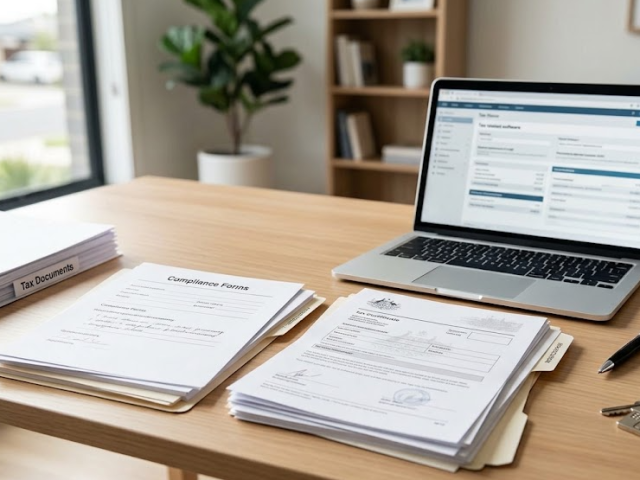
Add a pool safety or compliance certificate if you’ve got a pool (a few hundred dollars, and an inspection to book early rather than late), and make sure your smoke alarms meet your state’s current requirements, because that’s a cheap fix that becomes an expensive delay if it’s discovered at the wrong moment. Contract preparation pricing by state is on our add-ons page if you’d like a real figure for your state rather than a range.
Stamp duty, capital gains and the certificate you need
Stamp duty is your buyer’s cost, not yours. Transfer duty is paid by the buyer in every Australian state and territory. You don’t get back the stamp duty you paid when you bought, either. That money went to the state revenue office years ago and it isn’t refunded on sale. We’ve answered this one in more detail in our post on the main costs of selling and whether stamp duty applies.
Capital gains tax. If the property has been your home for the whole time you’ve owned it and you haven’t used it to earn income, the main residence exemption generally means there’s no CGT to pay. If it’s an investment property, a second home, or a former home you rented out, CGT is in play on the gain. Two things soften it: holding the asset for more than 12 months generally gives you a 50% discount on the gain, and the ATO’s six-year rule lets you keep treating a former home as your main residence for up to six years while it’s rented out. The ATO’s guidance on treating a former home as your main residence sets out the conditions. CGT is worked out on your tax return, not at settlement, so it won’t come off your proceeds on the day. It turns up months later, so put money aside for it when the sale settles, and talk to a registered tax agent before you sign a contract if there’s any chance it applies to you.
The ATO clearance certificate. Yes, you need one. Since 1 January 2025, Australian residents selling property need an ATO clearance certificate, no matter what the property is worth. The old $750,000 threshold is gone. If you can’t give your buyer a valid certificate before settlement, the buyer is legally required to withhold 15% of the purchase price and send it to the ATO. On a $900,000 sale that’s $135,000 held back from your proceeds. You get it back, but not until you lodge your tax return and the ATO works through it, which could be the better part of a year away. If you’re relying on those funds to settle your next purchase, that’s a serious problem. (If you’re a foreign resident for tax purposes, different rules apply and you’d apply for a variation instead, so talk to your tax agent.)
The certificate is free, valid for 12 months, and you can apply through the ATO’s clearance certificate page before you’ve even signed a contract. Most come through in a few days. Some take up to 28. Apply for it the week you decide to sell. It costs nothing, and it’s the single cheapest way to protect yourself from an expensive settlement delay.
What’s worth spending money on before you list
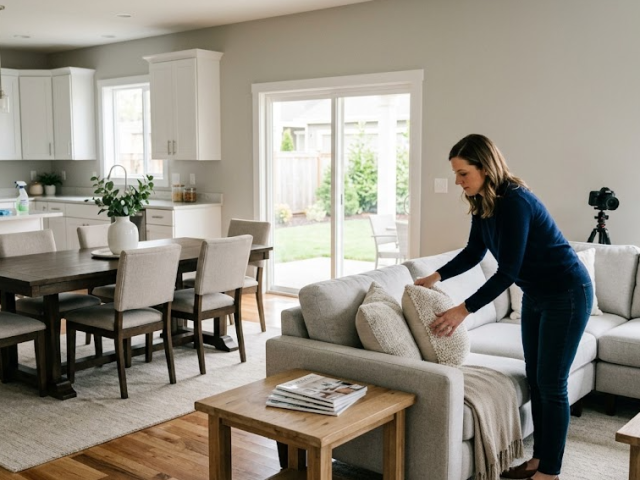
Presentation costs are the ones you control completely, and they range from nothing to five figures depending on how far you go.
- A deep clean and a declutter. The highest return per dollar of anything on this list, and largely free if you do it yourself. Our room-by-room clean-before-you-list checklist covers the jobs people miss.
- Professional photography. Worth paying for. It’s the first thing every buyer sees and phone photos are obvious.
- Small repairs. Fix the dripping tap, the sticking door, the cracked tile. Cheap, and their absence reads as neglect.
- Styling or full furniture hire. $2,000 to $10,000 depending on the size of the house and the length of the campaign. It can lift the result on an empty or dated property. It’s much less useful on a well-presented, occupied home.
- Renovating before sale. Usually the worst-value option on the list. You rarely get your money back, and you delay the campaign while you do it.
Spend on the cheap things first. They do most of the work.
What it looks like on a $900,000 sale
Same house, same buyer, same settlement. The only line that changes is how you took it to market.
| Traditional agent | Selling privately | |
|---|---|---|
| Commission (2.5%) | $22,500 | $0 |
| Marketing / listing | $5,000 (vendor-paid advertising) | Flat listing fee |
| Conveyancing + disbursements | $2,000 | $2,000 |
| Mortgage discharge + registration | $530 | $530 |
| Presentation | $2,000 | $2,000 |
| Moving | $1,500 | $1,500 |
| ATO clearance certificate | $0 | $0 |
| Total | $33,530 | Around $7,000 |
Everything below the top two rows is identical, because those costs belong to the transaction rather than to the method. The gap is roughly $26,500, and it’s all in the first two lines. That’s the case for selling privately in one table. Whether it’s right for you depends on how much of the work you want to do yourself, and we’re honest about that: private selling asks more of you. It just doesn’t ask $26,000 more. Our step-by-step guide to selling your home online sets out what the work actually involves, if you want to weigh the effort against the number.
8 ProductReview.com.au Real Estate Award wins in 9 years — including 2026
How to keep the bill down

About the author
Coreyna Blachut has worked in agent-assisted private sales and leasing technology since the sector began in Australia in 2006. She’s part of the team behind PropertyNow, Australia’s first agent-assisted real estate platform, which has helped over 10,000 owners sell or lease their own properties.
Read more about PropertyNow, or talk to the support team seven days a week if you have a question about your own sale.