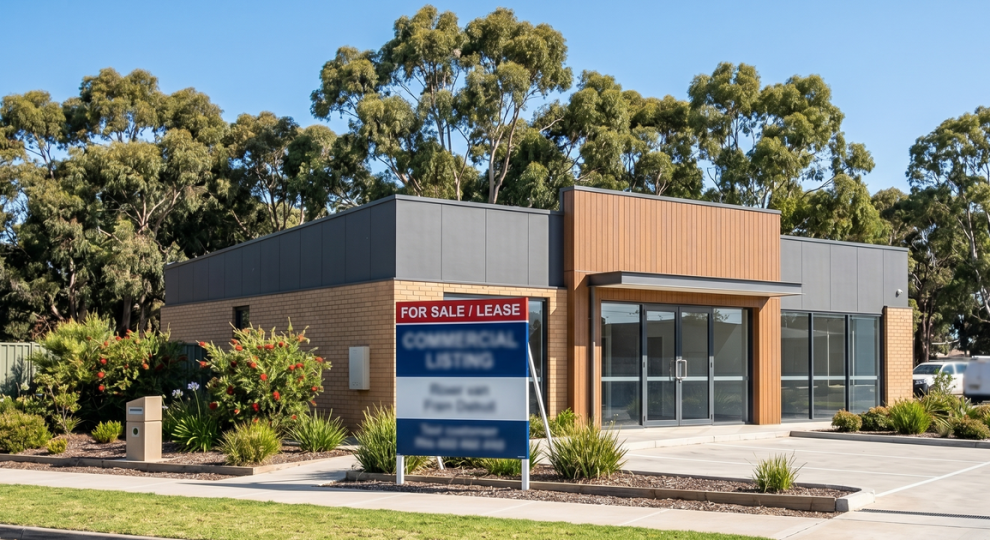
How to sell commercial property without an agent
Selling a commercial property yourself can save you a serious sum — commercial agent commissions are charged on values that are often well into seven figures, so the dollar saving dwarfs even what a private house sale saves. And yes, it’s entirely doable: you can market, negotiate and sell your own shop, office, warehouse or industrial unit without handing a percentage to an agent.
But here’s the honest part: selling commercial property is a different game from selling a house. The buyers are different, the property is valued differently, GST comes into play, and any lease in place sits right at the centre of the deal. None of it is beyond you — it just pays to know how it differs before you start. So let’s walk through it.
How selling commercial differs from selling a house
Five differences shape everything else:
- The buyers are investors and businesses, not families. Your buyer is usually an investor chasing a return, an owner-occupier business buying its own premises, or a developer — a smaller, more sophisticated pool that often spans the whole country, not just your suburb. They buy on numbers, not on how the kitchen feels.
- It’s valued on income, not emotion. A tenanted commercial property is priced largely on its yield — the net annual rent divided by a market capitalisation (“cap”) rate. A vacant property is valued more like a house, on comparable sales and what an owner-occupier will pay. Either way, the maths matters more than the styling.
- GST is in the mix. Unlike an established home, a commercial sale generally involves GST — unless it qualifies as a “going concern” or uses the margin scheme (more on this below). It’s the single biggest thing to sort out early.
- The lease is central. If the property’s tenanted, the quality of that lease — the tenant, how long they’re locked in, the rent and who pays the outgoings — drives both the value and the buyer interest. The lease often sells the property.
- It’s a longer, more considered process. Fewer buyers, bigger decisions and heavier due diligence mean commercial sales typically take longer than residential. Patience is part of the plan.
How to sell commercial property privately, step by step
- Be clear on what you’re selling. Tenanted (an investment, aimed at investors) or vacant (aimed at owner-occupiers)? It shapes your buyer, your marketing and your price.
- Get the price right — on the numbers. For a tenanted property, work from its income and a realistic cap rate for the type and location; for a vacant one, lean on comparable sales. Our guide to valuing a commercial property walks through the two main methods.
- Sort out your GST position before you market or price. Talk to your accountant early about whether your sale attracts GST, qualifies as a GST-free going concern, or suits the margin scheme — it changes the price you advertise and the contract you’ll need.
- Prepare an Information Memorandum (IM). Commercial buyers expect a proper info pack: property details, the lease and income, outgoings, zoning and permitted use, recent figures and good photos. A clear IM does a lot of your selling for you.
- Choose your sale method. Private treaty (a listed price, negotiated) is common, but commercial also lends itself to auction or Expressions of Interest (EOI) — where you set a closing date and invite written offers, which can suit unique properties with several interested parties.
- Market on the right channels. Commercial buyers look in different places to homebuyers — primarily realcommercial.com.au and commercialrealestate.com.au. Getting onto those is the key to reaching the national investor audience.
- Be ready for due diligence, and negotiate on the facts. Serious buyers will scrutinise the lease, outgoings, zoning and condition. Have your documents ready (see the checklist below), and negotiate on the numbers — price, yield, lease terms and settlement.
- Use a solicitor who knows commercial. Commercial contracts, leases and GST clauses are more involved than residential. A solicitor experienced in commercial property handles the contract, special conditions and settlement — this is the part to lean on a professional for.
What a commercial buyer will want to see
Have this due-diligence pack ready — it speeds up the sale and builds buyer confidence:
- Certificate of title and any plans
- Zoning and permitted-use details
- The lease(s) in full, plus a rent and review schedule
- An outgoings statement (council and water rates, land tax, insurance, body corporate/strata where relevant)
- Recent rates notices and outgoings figures
- Building compliance and any relevant certificates or reports
- Income and outgoings figures for the property
Notice how much of that pack is about the lease and the income, not the building. That’s not an accident, and it points to the single highest-impact thing you can do before you list.
What our team sees
“Lease length, no contest. Get a longer lease locked in, or a stronger tenant on the books, and suddenly the property looks a lot less risky to a bank. That means buyers can borrow more easily and on better terms, which means more people can actually afford to buy it, which pushes the price up. It’s the cheapest, highest-impact thing an owner can do before a sale.”
Chenelle Moothedom, Senior Agent, PropertyNow
The mechanics of why the lease drives the price (the bank-lending chain, and how to put a number on it) are covered in our guide to how commercial property is really valued — worth reading before you set your asking price.
A closer look at GST (talk to your accountant)
This is where commercial really differs from residential, so it’s worth understanding the shape of it — then getting proper advice. A commercial property sale generally attracts GST of 10%. But there are two important exceptions:
- Going concern. If the property is sold as a “going concern” — broadly, a tenanted property sold with its leases in place — the sale can be GST-free. It requires that the sale is for payment, the buyer is registered (or required to be registered) for GST, and both parties agree in writing that it’s a going concern. For a tenanted property, this is often the goal.
- The margin scheme. In some cases you can use the margin scheme, where GST is calculated on the margin rather than the full sale price.
Getting this right affects the price you advertise, how you structure the deal and the contract you sign — so it’s genuinely worth a conversation with a registered tax agent or accountant before you go to market, not after.
The commission you’re saving
Commercial commissions are charged on big numbers, so the saving from selling privately is substantial — often many tens of thousands of dollars on a higher-value property. With PropertyNow, you can list your commercial property for sale on realcommercial.com.au and commercialrealestate.com.au for a flat fee, with no commission payable — ever. You handle the enquiries and negotiation (which, dealing directly with serious buyers, you’re often better placed to do than a middle-person), and keep the difference.
The bottom line
Selling commercial property without an agent is absolutely achievable — and the commission saving is bigger than almost anywhere else in property. The key is respecting that it’s a different process: price on the income and the numbers, sort your GST position early, present a clear information memorandum, market where commercial buyers actually look, and lean on a commercial-savvy solicitor for the contract. Do that, and you can run a professional, profitable sale yourself — and keep the commission that would otherwise come straight off the top.
Frequently asked questions
Can I sell commercial property without an agent in Australia? Yes. You can market, negotiate and sell your own commercial property privately — listing it on the commercial portals (realcommercial.com.au and commercialrealestate.com.au), handling enquiries yourself, and using a commercial solicitor for the contract and settlement. You save the agent’s commission, which on commercial values is substantial.
How is commercial property valued when selling? A tenanted commercial property is valued mainly on its yield — the net annual rent divided by a market capitalisation rate for that property type and area. A vacant property is valued more like a residential one, on comparable sales and owner-occupier demand. The income and the numbers drive the price.
Do I have to pay GST when selling commercial property? Usually, yes — a commercial sale generally attracts 10% GST. But it can be GST-free if it qualifies as the sale of a “going concern” (broadly, a tenanted property sold with its leases), or the margin scheme may apply. It’s specific to your situation, so get advice from a registered tax agent before you market.
What’s an Expression of Interest (EOI) sale? An EOI campaign invites buyers to submit written offers by a set closing date, rather than listing a fixed price. It’s common in commercial property, especially for unique properties or where several buyers are likely, as it can draw out the strongest offer.
What documents do I need to sell a commercial property? Buyers will want the title, zoning and permitted-use details, the lease(s) and a rent schedule, an outgoings statement, recent rates notices, building compliance information, and the property’s income and outgoings figures. Having this pack ready speeds up due diligence and builds buyer confidence.
Is selling commercial property harder than residential? It’s more involved — the buyer pool is smaller and more sophisticated, the valuation is income-based, GST is in play, and any lease is central — and it usually takes longer. But it’s well within reach of an organised private seller, especially with a good solicitor handling the legal side
List your commercial property — no commission
Sell your commercial property yourself on realcommercial.com.au and commercialrealestate.com.au for a flat fee — no commission, ever. Reach the national investor audience and keep the difference.
Related stories
- How to value a commercial property: the top two methods
- Do you need a conveyancer to sell privately?
- Private treaty vs auction: which is right for your property?
Written by the PropertyNow team. PropertyNow helps Australians sell, lease and manage their own residential and commercial property privately, with licensed agent support seven days a week.
This article is general information only and is not tax, legal or financial advice. Commercial property sales involve GST and legal complexities that vary by property and circumstances — get advice from a registered tax agent or accountant and a solicitor experienced in commercial property before you act.